Click or Tap the video below to play (Double-click for full screen)
If you wish to assist you can
Contribute to the Cathedral Restoration Fund
History of the Cathedral
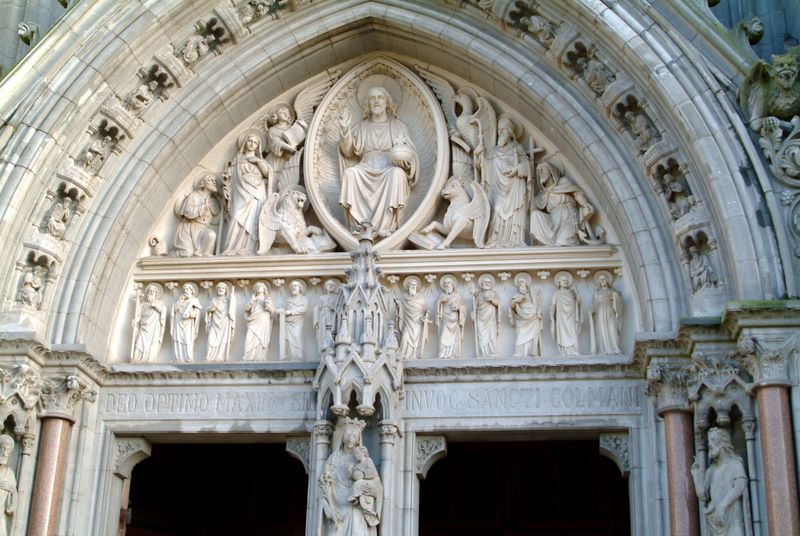
Dedication to St Colman
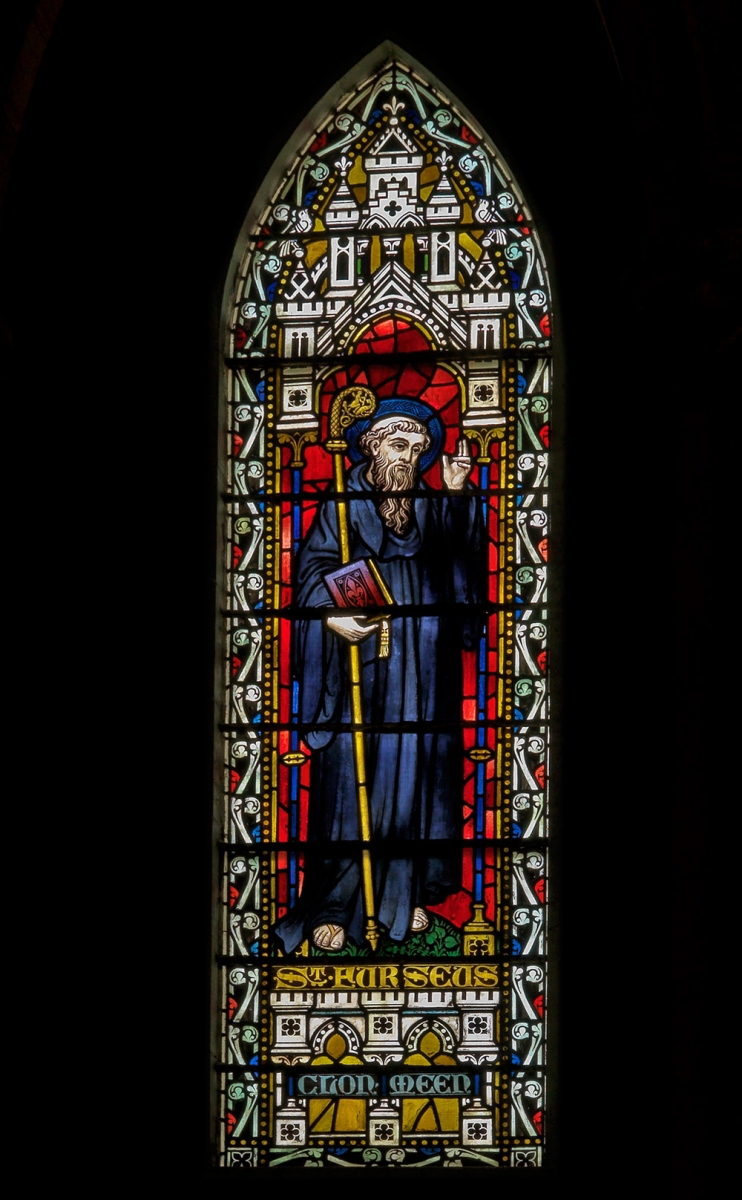
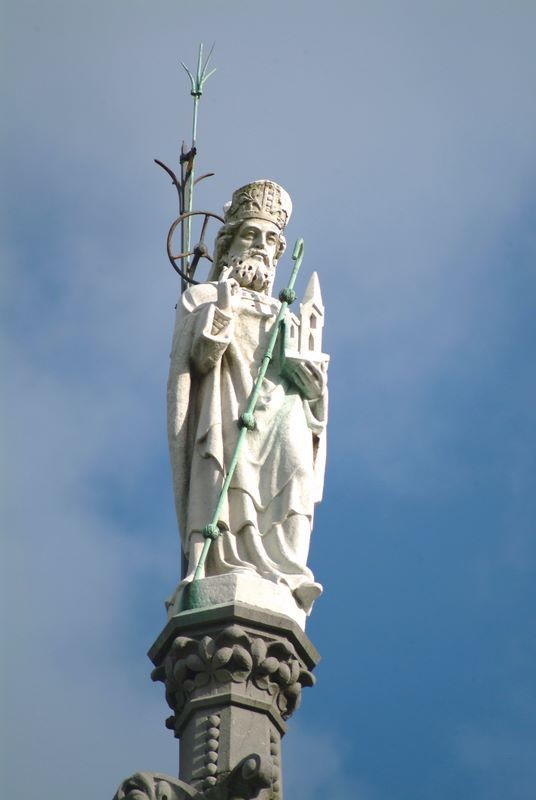
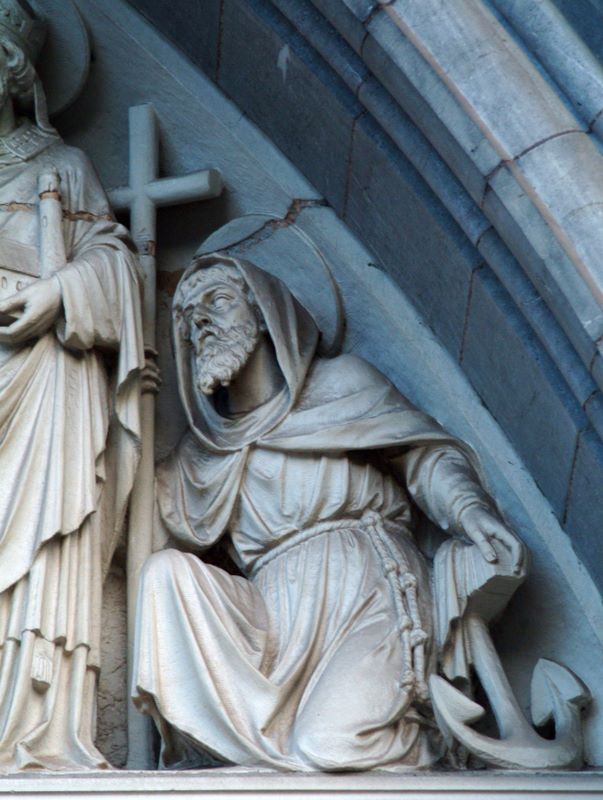
The Diocese of Cloyne has its beginnings in the monastic settlement of St. Colman at Cloyne in East Cork. A round tower and pre-reformation Cathedral still stand at this site. Colman, son of Lenin, lived from 522 to 604 A.D. He had been a poet and bard at the court of Caomh, King of Munster at Cashel. It was St. Brendan of Clonfert that induced Colman to become Christian. He embraced his new faith eagerly and studied at the monastery of St. Jarleth in Tuam. He later preached in East Cork and established his own monastic settlement at Cloyne about 560 A.D. His feast day is celebrated on November 24th.
Planning the Cathedral
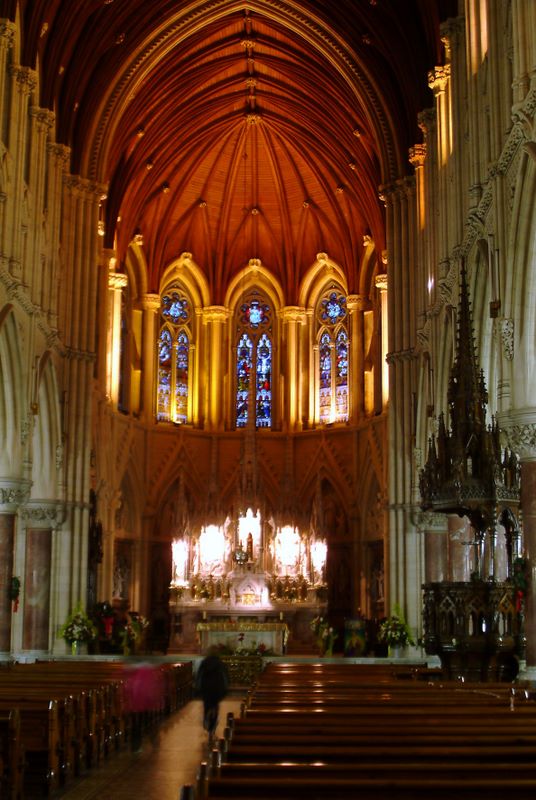
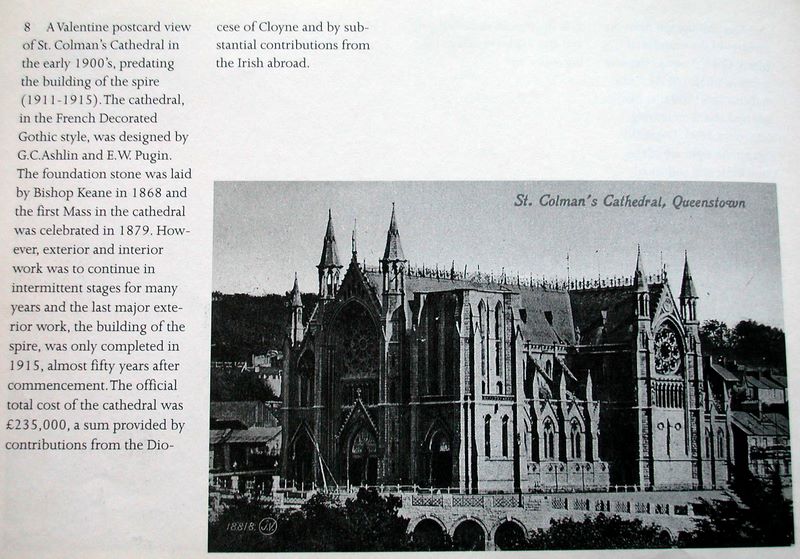
Ten years of extensive planning and generous parochial effort preceded the building of the cathedral. The Building Committee, composed of leading parishioners and presided over by the Bishop, had many complex problems to solve such as the style of architecture and the approximate dimensions of the projected building; the provision of a temporary church, and so on. In the years of planning(1857- 1867) the building project received most generous financial support from the Parish of Cobh and prominent citizens – whose names appear in Parish records and who gave unstinted service on the Queenstown Cathedral Building Committee. In 1869 the first Diocesan Collection was made and the entire Diocese contributed generously. Besides such public support, very many private donations were made. There were also substantial contributions to the Building Fund from Australia and America. According to the plaque in the South Transept, the total cost of the Cathedral was £235,000.
By the beginning of 1868 a new temporary parish church was opened for worship. In February of the same year the old Parish Church was taken down and with some expansion of the plot, it was expeditiously developed for the erection of the Cathedral.
The Architects
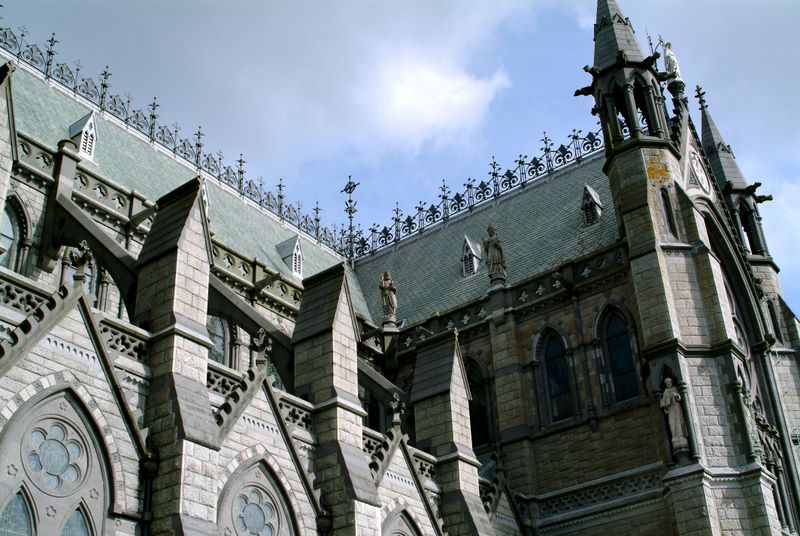
In November 1867 the draft plans of architects Messrs, Pugin and Ashlin were formally approved by the Building Committee. Because of the extensive commitments of Pugin and Ashlin in England and Ireland, respectively, it was agreed to divide the work, each architect to work in his own country. In the divide the Cathedral became Ashlin’s exclusive responsibility; thenceforth on this talented architect the whole burden of the work devolved. Later, Ashlin took into partnership T.A. Coleman, a magnificent draughtsman who helped to bring the Cathedral to glorious completion.
Building Work Begins
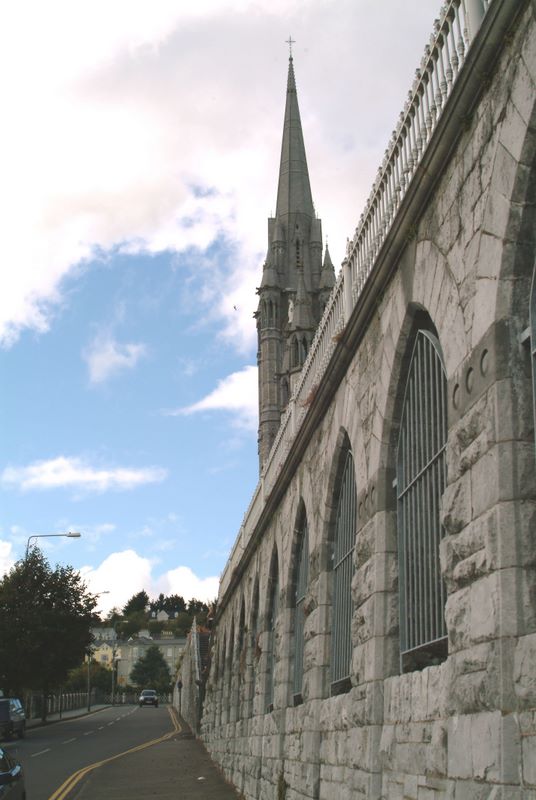
On April 25th 1868, Bishop Keane raised the first sod of the deep excavations for the foundations. The sharply shelving hillside posed many site-development problems for the contractors who lacked the machinery which now makes site-development comparatively easy. On July 25th 1868, Bishop Keane laid the first stone of the Cathedral’s foundations and on September 30th 1868, he laid the first stone of the superstructure. In this stone was deposited a container with a parchment recording in Latin details of the historic ceremony.
The Years of Building 1869 - 1915
The building of the superstructure began in 1869. When the contractors had carried up the external walls to an average of 12 ft. Bishop Keane deemed it advisable to have the plans made more elaborate and, accordingly, the architects were duly consulted. The whole character of the work had then to be changed; in fact – with the exception of the ground plan – none of the original plans were adhered to. These extra works increased by many thousands of cubic feet of stone the quantity already provided for and substantially increased the cost. Bishop Keane did not live to see the completion of his cherished project as he died in January 1874. His successor, Bishop John McCarthy, determined to carry out strictly the instructions of his predecessor and not supercede them by any suggestion of his own.
Building Work Completed
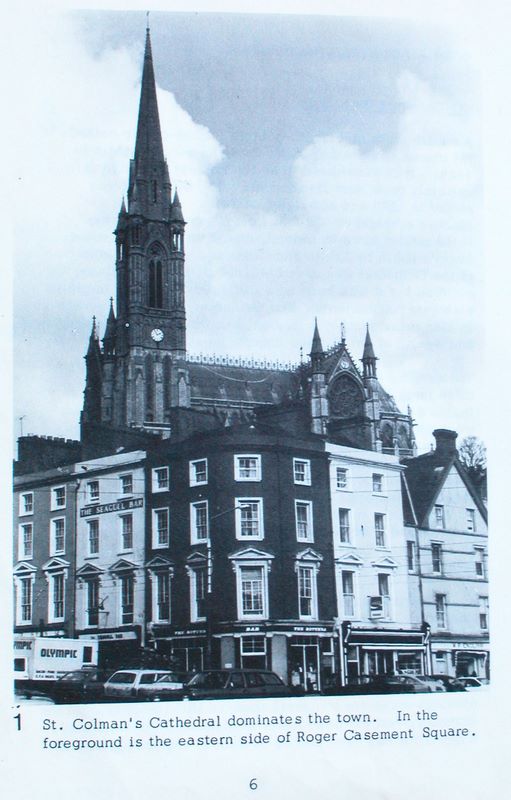
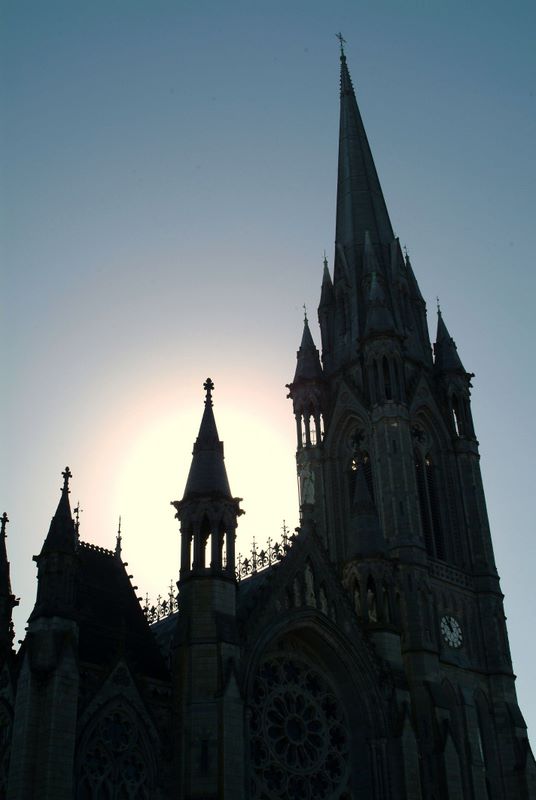
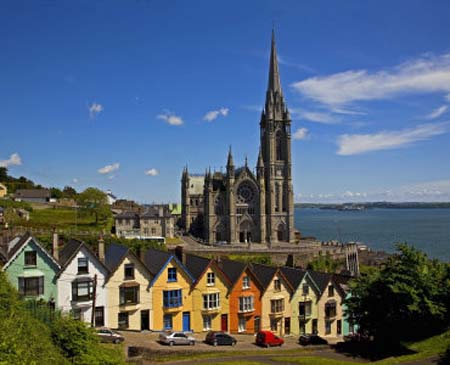
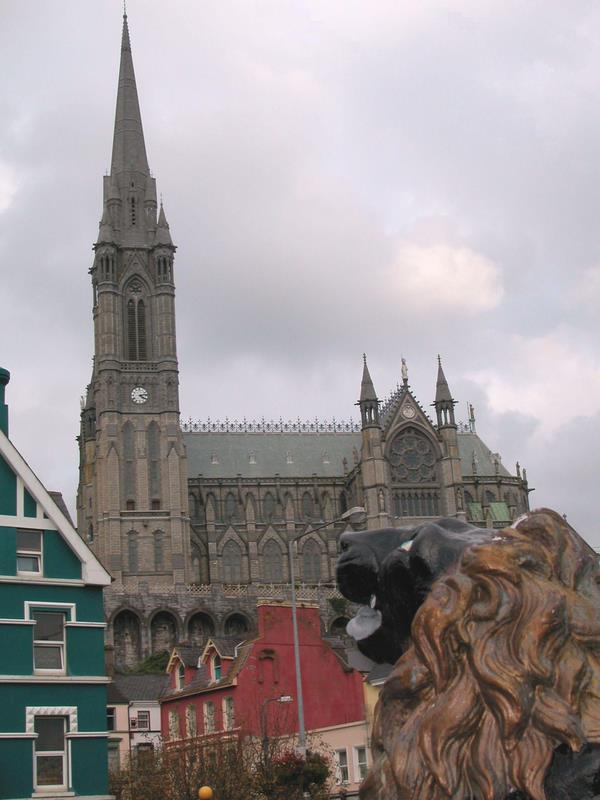
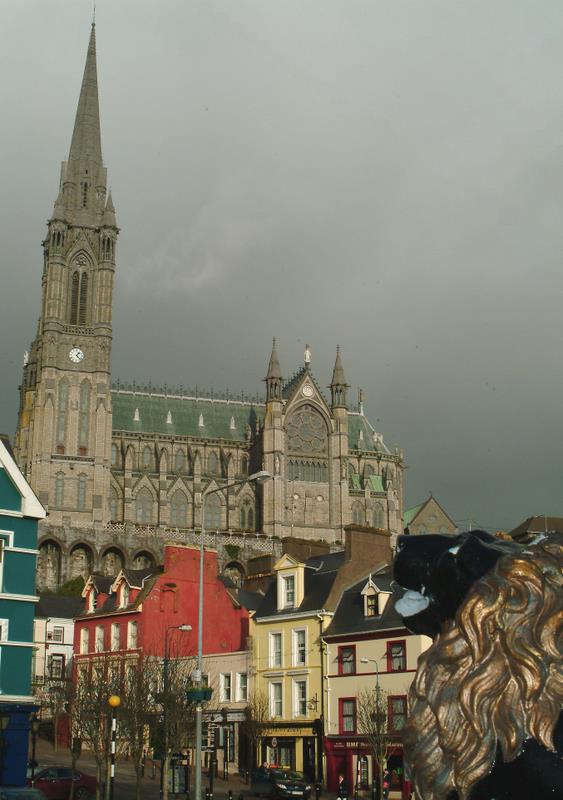
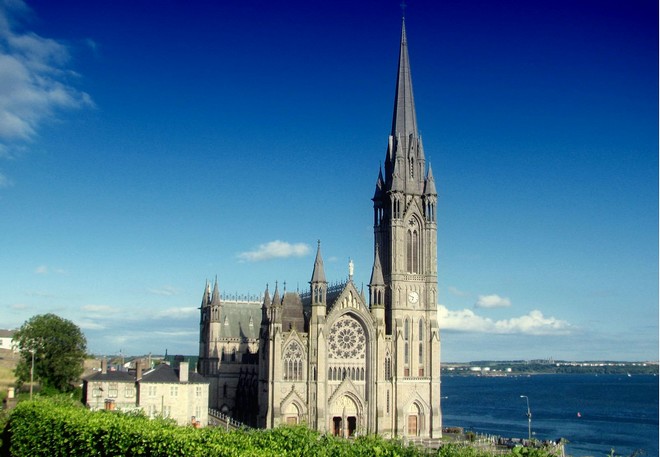
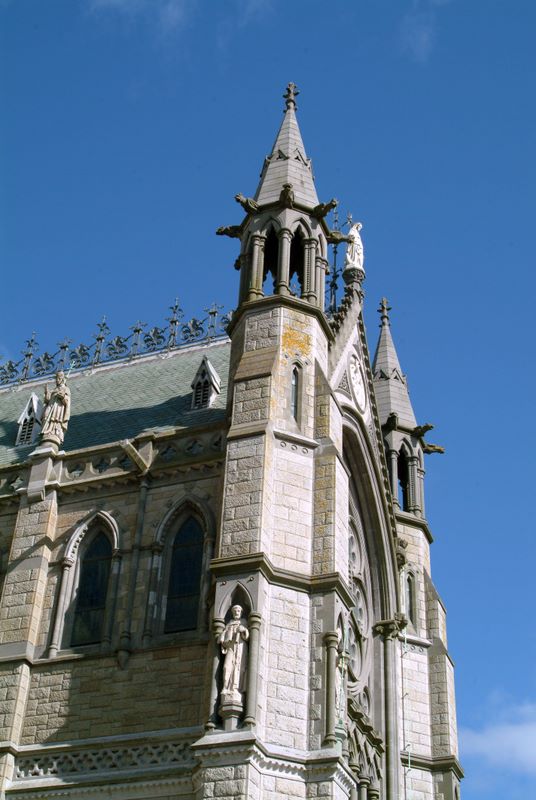
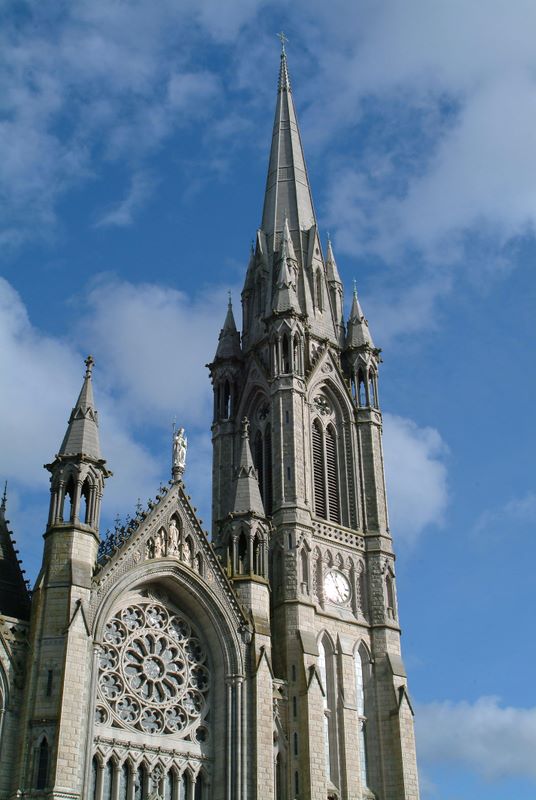
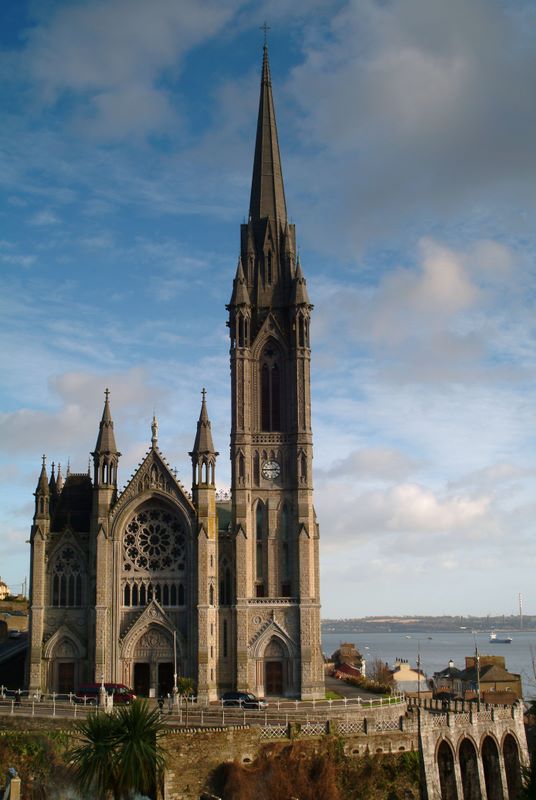
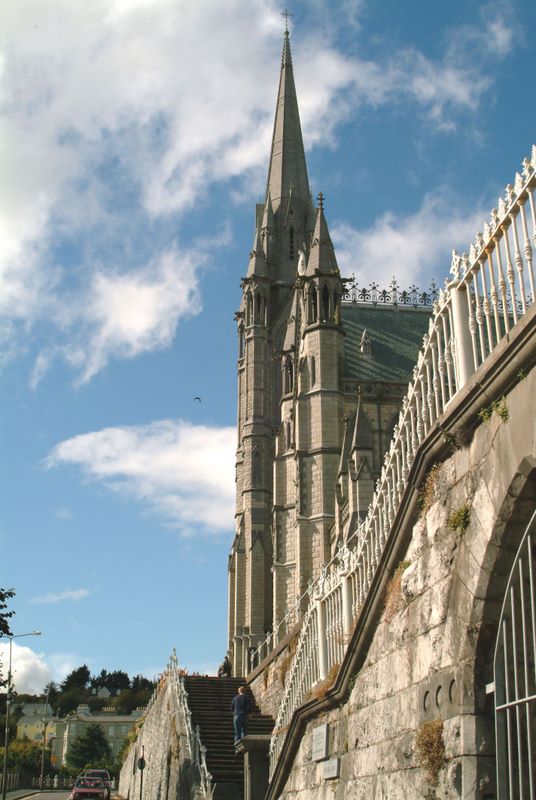
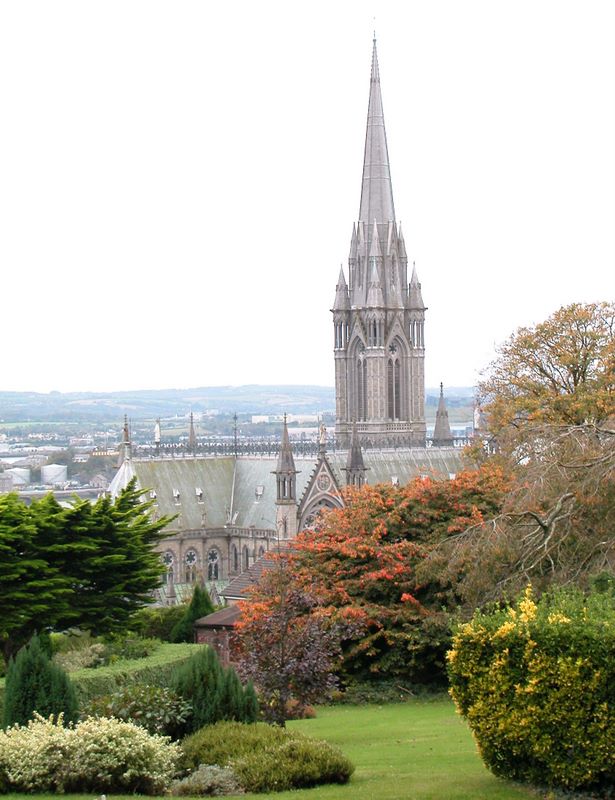
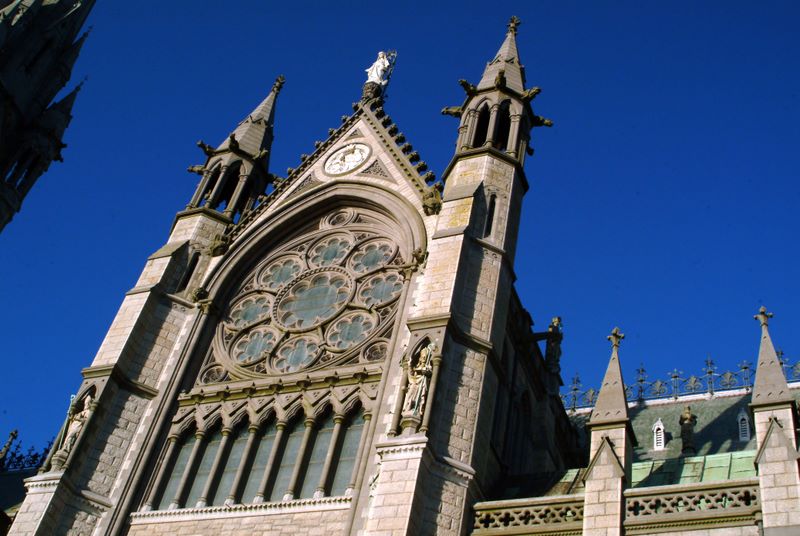
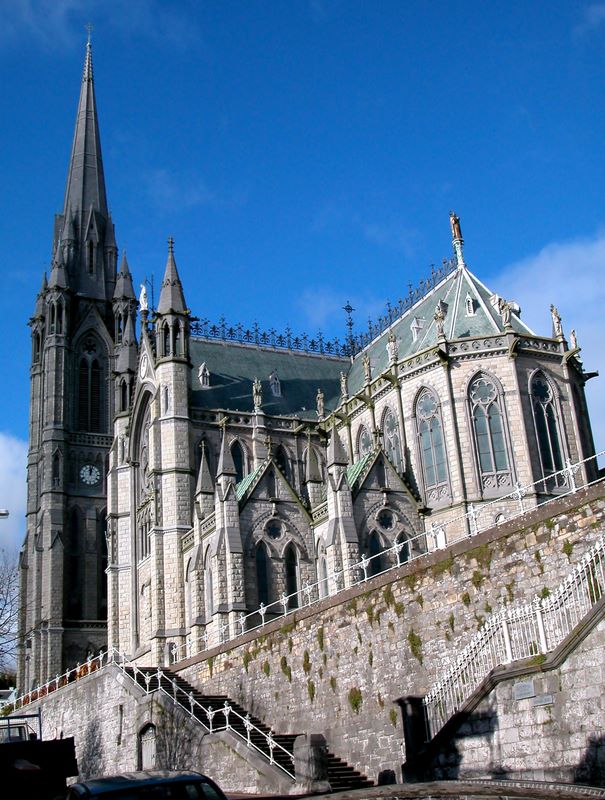
The erection of the limestone spire – last of the major external works – was to complete the Cathedral’s grace of outline. The detailed drawings of architects Ashlin and Coleman – product of fertile imagination and facile pencil – showed an octagonal spire merging harmoniously with the quadrangular tower and its surrounding pinnacles. In 1911 the building of the spire was begun by the Cork firm of J. Maguire: for four years stone masons worked from lofty windswept platforms, rigged on timber scaffolding, to complete the gracefully tapering spire. In March 1915 the last scaffolding surrounding the spire was taken down; and then the work of the Cathedral builders was virtually completed.
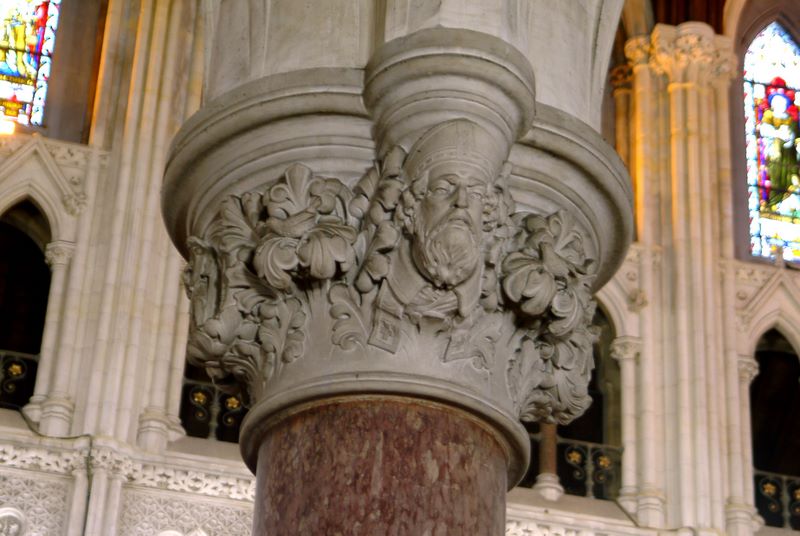
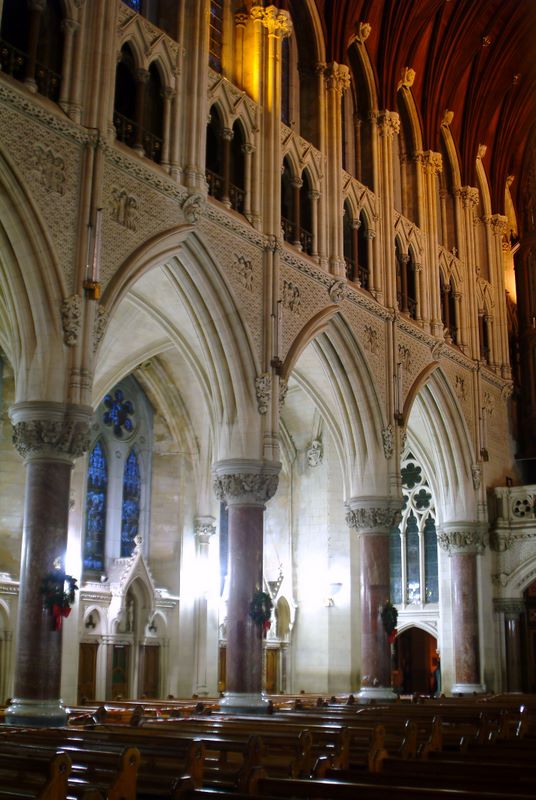
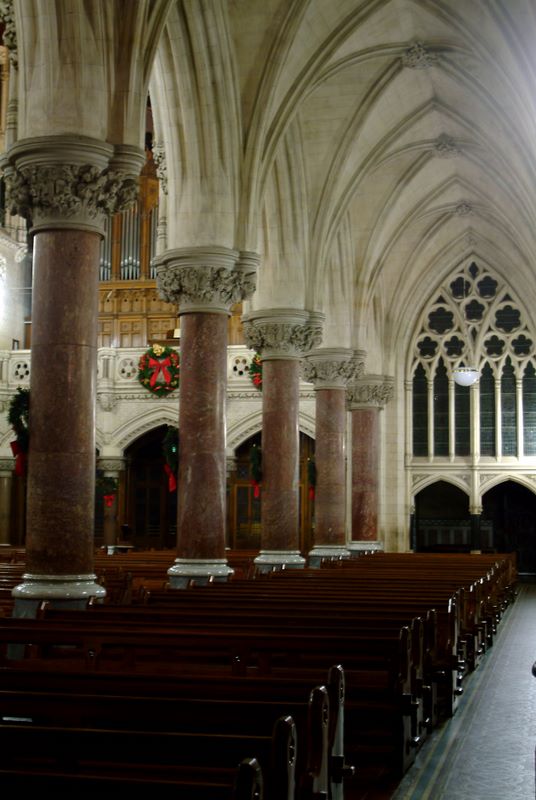
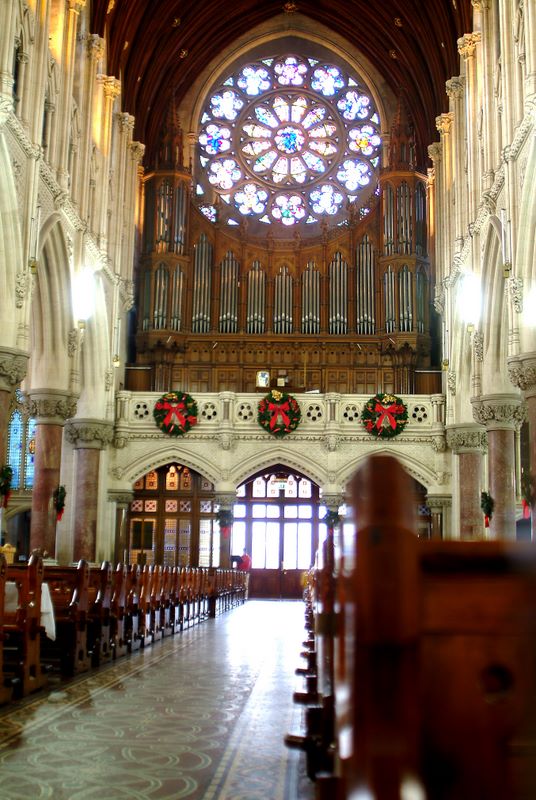
On August 24th 1919, solemn commemoration ceremonies took place to mark the Cathedral’s Consecration. High Mass was celebrated by the Arch-bishop of Tuam. Each year on the anniversary day of the Consecration, candles are lighted before the twelve crosses on the nave pillars which mark the places where the walls had been anointed with Sacred Chrism.
Excerpts taken from “Guide to St. Colman’s Cathedral, Cobh.”